About
Alessandro Valente
Aerospace engineering student at the University of Colorado Boulder, graduating in May 2027. I build vehicles and the analysis tools that decide whether they will work.
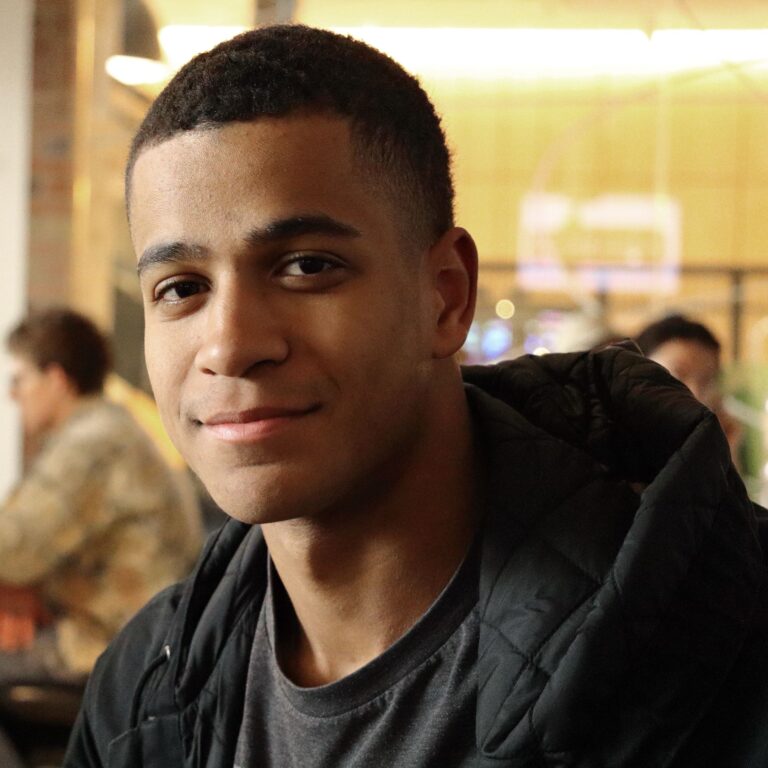
I was born in Woking, England, did my A-Levels there in maths, physics and computer science, and came to Colorado for the aerospace degree. I have kept both places: Boulder in term time, Woking otherwise.
My work sits in two places that usually stay apart. On one side is hardware: I founded the Engineering Connections Design Team and lead it as chief engineer, where twenty of us are developing a nitrous oxide and ethanol liquid sounding rocket targeting a 10 km apogee, and I have been on CU’s Formula SAE aerodynamics team since 2023, leading sidepod development from concept through CFD, wind tunnel testing and manufacture. On the other side is analysis: reinforcement learning for differential games in Julia, and spatial disorientation countermeasures in the Bioastronautics group, supported by the NASA Human Research Program.
The connection between them is that I do not trust an analysis I have not seen fail against something physical, and I do not trust hardware built without an analysis that could have predicted the failure. Most of the projects on this site are the product of moving between those two positions until they agree.
I also teach maths to high school students, writing lecture material, homework and mark schemes.
At a glance
| Degree | BS Aerospace Engineering Sciences, University of Colorado Boulder, expected May 2027. Minor in Engineering Management. Colorado Engineer Magazine Scholarship recipient. |
|---|---|
| Design team | Founder and Chief Engineer, Engineering Connections Design Team. Liquid bipropellant sounding rocket, 20 engineers. |
| Formula SAE | Aerodynamics, CU Boulder Racing Team, since 2023. Sidepod lead. |
| Research | Multi-agent reinforcement learning for differential games, with Dr. Vishala Arya. Spatial disorientation countermeasures in the Bioastronautics group, with Dr. Torin Clark, supported by the NASA Human Research Program. |
| Capstone | Small debris detection satellite, Electronics Lead, advised by Prof. Holzinger and Prof. Matsuo. |
| Also | Outreach Officer, Society of Ethical Engineers. Former President of CU’s photography club. Former Program Coordinator, Engineering Connections. Project Manager for a 1 m boost glider in the Aerospace Vehicle Design Laboratory. |
| Based in | Boulder, Colorado and Woking, England. |
| Citizenship | United Kingdom, Italy and the Bahamas. |
Technical
| Programming | MATLAB, Python, C++, Julia, JavaScript and React, LaTeX. |
|---|---|
| Software | SolidWorks, CATIA, ANSYS, Simulink, Blender, OpenRocket, NASA CEA. |
| Analysis | Computational fluid dynamics, trajectory simulation, finite element and structural analysis, control systems modelling, data analysis. |
| Hands-on | Carbon fibre layup and vacuum bagging, CNC machining, laser cutting, hot-wire foam cutting, electronics prototyping and soldering, wind tunnel testing. |
| Coursework | Orbital mechanics and attitude dynamics, propulsion, thermodynamics and heat transfer, structures, electronics and communications, aerospace vehicle design and performance. |
Away from the desk
I raced in the British Junior Supersport Championship, a support class running at British Superbike rounds, before university, and I still ride and work on bikes. It is not unrelated to the engineering: vehicle dynamics stops being abstract once you have had to feel the difference a setup change makes. Some of the same instinct is why I ended up on the aerodynamics team rather than somewhere quieter.
Get in touch
I am looking at roles in propulsion, GNC, flight software, astrodynamics and space life sciences, starting after graduation in May 2027. The common thread in what I enjoy is problems where the model and the hardware have to be reconciled, and where being wrong is discoverable.
| valessandro082@gmail.com | |
| linkedin.com/in/valentea | |
| Resume | Download as PDF |